Every time a company decides to “implement IBP,” the conversation usually starts the same way.
“We need a better forecast.”
And just like that, the entire organization begins a heroic quest to improve forecast accuracy — new software, new models, more meetings, more spreadsheets, more debates about whether next month should be up 3% or down 2%.
Meanwhile, leadership is quietly hoping this will somehow fix inventory, service, profitability, growth, capacity constraints, and the general feeling that the business is being run by a series of surprises.
Unfortunately, a better forecast will not solve those problems.
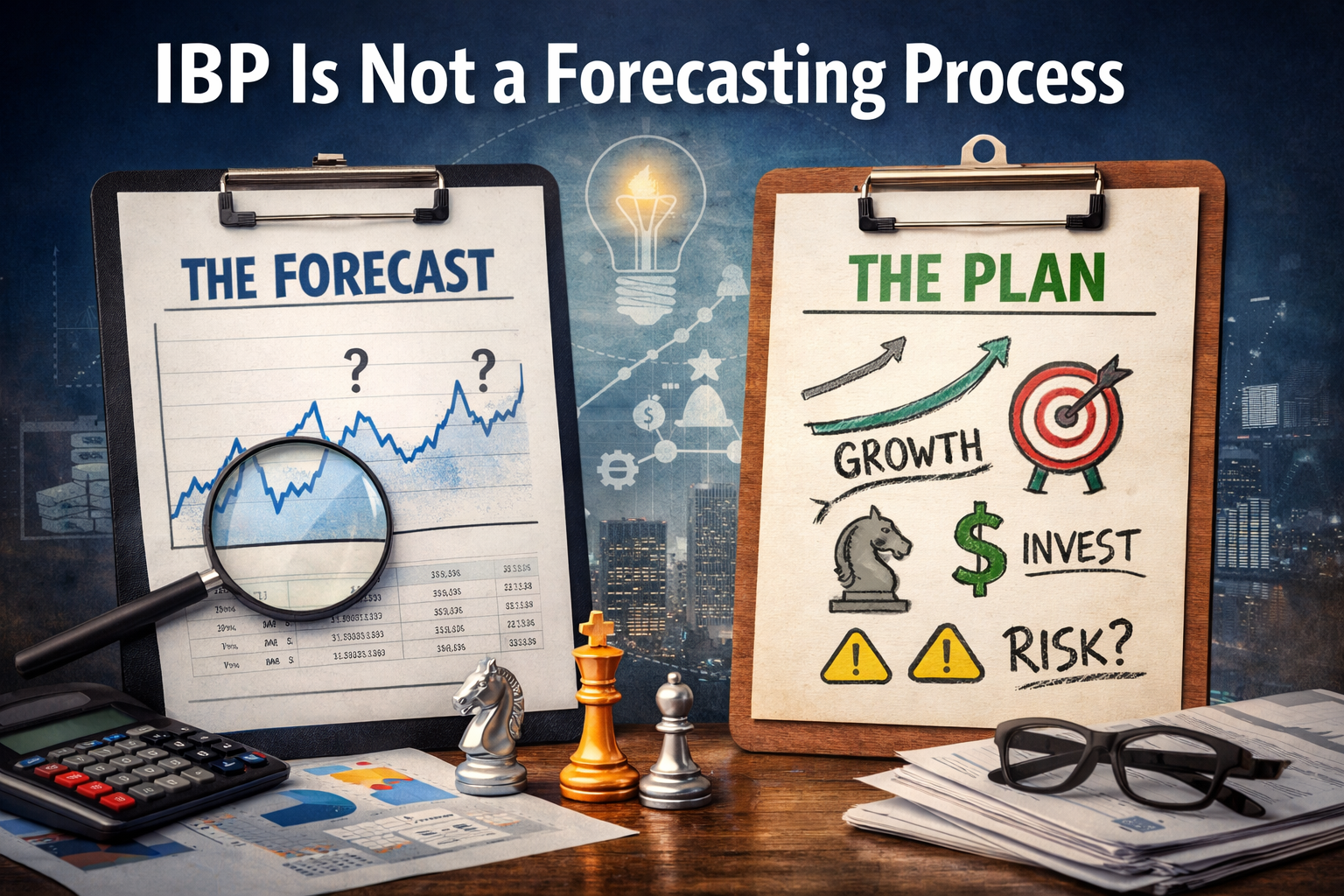
A forecast is simply an estimate of what might happen. It is built from historical data, market insight, customer signals, and commercial assumptions. It helps the organization understand the most likely future.
But a plan is different.
A plan is what the business decides it will commit to making happen.
Leadership may choose to invest in capacity to support growth.
They may accelerate a product launch.
They may prioritize certain markets or customers.
Or they may decide to accept certain risks.
Those are not forecasting decisions. Those are management choices.
And this is where the real purpose of Integrated Business Planning comes in.
IBP exists for a much bigger reason than improving forecast accuracy: to deploy strategy.
If leadership has not clearly defined where the business is going — revenue ambition, profitability expectations, market position — then IBP has nothing to align to. The process becomes an exercise in debating numbers instead of managing the future.
And this is where many implementations quietly drift off course.
The demand team works harder on the forecast.
Supply chain builds plans around it.
Finance continues to run its own numbers.
Sales still has a different view of the world.
Everyone has a number.
No one really believes any of them.
The real power of IBP comes when leadership uses the process to answer much bigger questions:
Do we have the product portfolio to achieve our strategy?
Do we have the capacity to support growth?
Are we investing in the right opportunities?
What risks exist in the plan — and what are we going to do about them?
A good forecast informs the conversation.
But leadership alignment creates the plan.
So yes, improving demand planning is helpful. It is part of the foundation. But if the organization believes IBP is simply a forecasting process, they are aiming far too low.
IBP is not about predicting the future.
It is about giving leadership the visibility — and the discipline — to shape it.